

Add Soft Close to Existing Hinges: A Step-by-Step Guide
Table of Contents
- Can You Add Soft Close to Existing Hinges?
- Understanding Soft-Close Hinge Compatibility
- What You'll Need Before Starting
- How to Fit Soft-Close Cabinet Dampers: Installation Steps
- Replace Cabinet Hinges with Soft-Close Hinges: When to Upgrade
- Soft-Close Cabinet Hinge Adjustment and Troubleshooting
- Common Mistakes to Avoid
- Frequently Asked Questions
Last Updated: October 17, 2026
Can You Add Soft Close to Existing Hinges?
Yes, you can add soft close hinges to existing hinges in most cases. The answer depends on your hinge type and the method you choose. For many cabinet setups, soft-close retrofit clips offer a straightforward solution. These clips attach directly to your current hinges without requiring full replacement.
At FixFit, we help joiners, cabinet makers, and DIY enthusiasts upgrade their cabinet hardware quickly. Soft-close technology transforms how doors behave. Instead of slamming shut, they close gently and quietly. This upgrade improves both durability and user experience.
The good news: you don't always need to replace your entire hinge system. A retrofit soft-close add-on often works perfectly. However, some hinge types don't support this approach. Understanding your hinge type is the first step.
Understanding Soft-Close Hinge Compatibility
Not every hinge accepts a soft-close retrofit clip. Compatibility depends on your hinge design, application type, and the clip mechanism itself.
Blum hinges are the most retrofit-friendly option. Models like the 110, 107, 100, and 95 accept soft-close clips easily. The Blum Blumotion system uses a clip-on design that requires no permanent modification.

Hafele hinges vary in compatibility. Some models support soft-close add-ons, whilst others require full replacement. Check your specific model number before purchasing.
Other manufacturers may have limited or no retrofit options. Generic or budget hinges often lack the engineering to support clip-on dampers safely.
The hinge application type matters too. Overlay, half-overlay, and inset hinges each need different soft-close solutions. A clip designed for overlay hinges won't work on inset applications.
What You'll Need Before Starting
Gather these items before beginning your installation:
- Your existing hinges (already installed)
- Soft-close clip appropriate to your hinge type (to add soft close hinges)
- Screwdriver (usually Phillips head, occasionally flathead)
- Measuring tape
- Pencil for marking
- Safety glasses
- Work gloves (optional but recommended)
FixFit stocks several Blum Blumotion soft-close clips designed for retrofit installation. The Blum Blumotion 973A0500 works with full overlay applications and costs £1.92. For half-overlay hinges, the Blum Blumotion 973A0600 is available at £2.50. Inset hinge users need the Blum Blumotion 973A0700 at £2.24.


For 170-degree hinges, the Blum Blumotion 973A6000 is available at £2.69.
All Blum clips feature steel construction with nickel plating and include a lifetime guarantee. The adaptive system adjusts automatically to your door's weight and closing force.
How to Fit Soft-Close Cabinet Dampers: Installation Steps
Fitting a soft-close clip takes roughly 10-15 minutes per hinge once you understand the process.
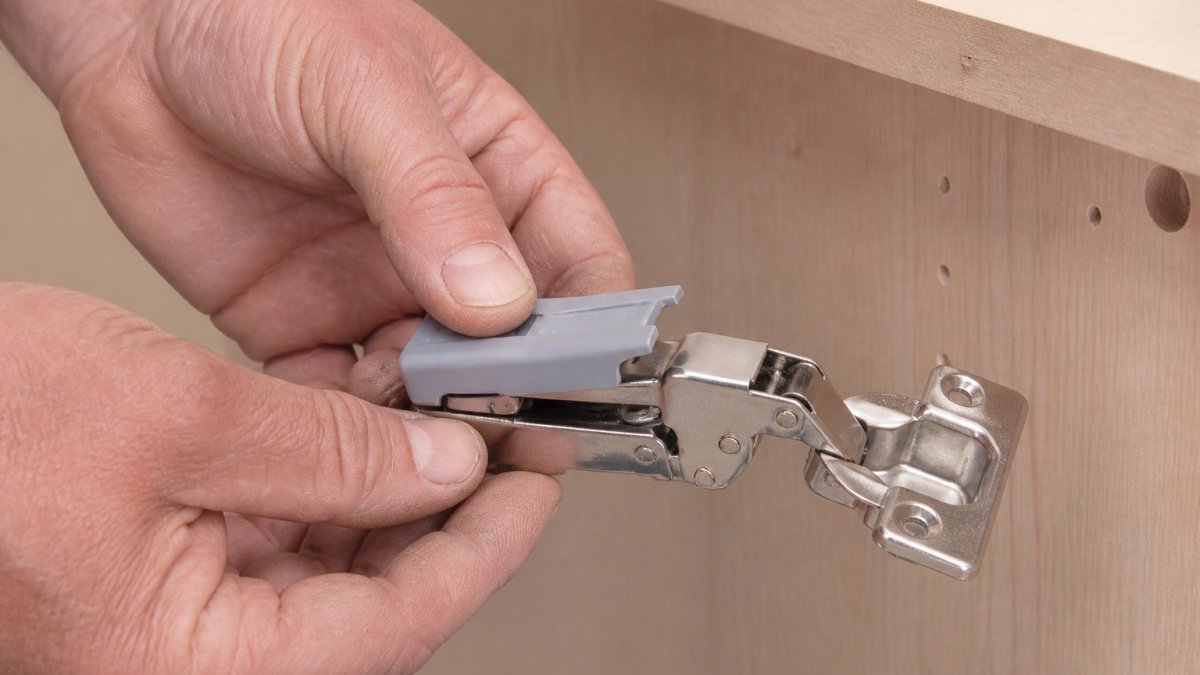
Step 1: Identify Your Hinge Type
Open your cabinet door fully. Look at the hinge arm carefully. Note whether the hinge sits on top of the door (overlay), partially recessed (half-overlay), or completely hidden inside the frame (inset).
Check the hinge body for manufacturer markings. Blum hinges typically display their model number clearly. Write down this information.
Measure the hinge opening angle. This detail determines which soft-close clip you need.
Step 2: Select the Right Soft-Close Add-On
Match your hinge type to the correct clip model. Ordering the wrong clip wastes time and money.
For full overlay hinges, choose the 973A0500. This is the most common configuration in modern kitchens.
For half-overlay applications, the 973A0600 is essential. Using a full overlay clip on a half-overlay hinge will not work properly.
Inset hinges need the 973A0700. These hinges sit completely inside the cabinet frame, requiring a different clip geometry.
If your hinges open beyond 110 degrees, check the 973A6000 for 170-degree applications.
Step 3: Prepare the Door and Hinge
Close the cabinet door gently. Remove any items stored inside to reduce weight during adjustment.
Inspect the hinge arm for dirt or debris. Wipe clean with a dry cloth. Soft-close clips require a clean surface for proper engagement.
Ensure the door closes smoothly without binding. If the door sticks or closes unevenly, address this first. A soft-close clip won't fix underlying hinge problems.
Step 4: Attach the Soft-Close Clip
Position the clip over the hinge arm. The clip should slide onto the arm smoothly. Do not force it.
Listen for a click sound. This indicates the clip has engaged fully with the hinge mechanism.
Test the clip position by gently opening and closing the door. The clip should remain firmly attached.
Some clips require a small screw for additional security. Check your clip's instructions. If screws are needed, use the provided fasteners only.
Step 5: Test and Adjust
Open the door slowly. It should move freely without resistance.
Close the door from a fully open position. The closing speed should be smooth and controlled. The door should not slam.
If the door closes too quickly, the clip may need adjustment. Many Blum clips feature a small adjustment screw. Turn it slightly to increase damping force.
If the door closes too slowly, reduce the damping adjustment. The goal is a gentle, controlled close without excessive delay.
Test the door multiple times. Adjustment often requires fine-tuning through repeated testing.
Replace Cabinet Hinges with Soft-Close Hinges: When to Upgrade
Sometimes, a retrofit clip isn't the best solution. Full hinge replacement becomes necessary in certain situations.
Blum Blumotion 973A0500 Clip On Soft Close for Blum Hinges →
Replace your hinges when:
- Your current hinges are damaged or worn
- The hinge type doesn't accept soft-close clips
- You want a fully integrated soft-close system
- Your hinges are over 10 years old
Full replacement offers advantages over retrofits. Integrated soft-close hinges work more smoothly. They eliminate the clip attachment point entirely. The damping mechanism sits inside the hinge body.
Installation takes longer than adding a clip.
Replacement makes sense for new installations or major kitchen renovations. For existing cabinets in good condition, retrofitting usually provides better value.
Soft-Close Cabinet Hinge Adjustment and Troubleshooting
After installation, your soft-close system may need fine-tuning. Common adjustments improve performance significantly.
Door closes too fast:
Turn the adjustment screw clockwise. This increases damping force. Make quarter-turn adjustments and test between each change.
Door closes too slowly:
Turn the adjustment screw anticlockwise. This reduces damping force. Again, use small adjustments and test frequently.
Door doesn't close all the way:
Check that the clip is fully engaged. Remove and reattach it if necessary. Ensure the hinge arm is clean and free of debris.
Clip keeps coming loose:
Verify you've used the correct fasteners. Some clips require screws for security. Tighten screws firmly but do not overtighten.
Door alignment is off:
Soft-close clips don't fix misalignment. If your door doesn't sit flush with the frame, adjust the hinge itself before adding the clip.
Common Mistakes to Avoid
Understanding what goes wrong helps you avoid costly errors. These mistakes happen frequently when upgrading to soft close.
Mistake 1: Ordering the wrong clip type
Many people guess their hinge application. They order a full overlay clip for a half-overlay hinge. The clip doesn't fit properly. Always verify your hinge type before purchasing.
Mistake 2: Installing on damaged hinges
Soft-close clips work best on healthy, properly functioning hinges. If your hinge is bent, loose, or worn, address that first. A clip won't rescue a failing hinge.
Mistake 3: Skipping the test phase
After installation, test the door repeatedly. Adjustment usually improves performance. Many people install once and assume the job is complete.
Mistake 4: Over-tightening fasteners
If your clip uses screws, tighten them firmly but not excessively. Over-tightening can strip threads or damage the clip.
Mistake 5: Ignoring manufacturer instructions
Each clip model has specific installation steps. Read the instructions fully before starting. Different clip designs attach slightly differently.
Mistake 6: Attempting retrofit on incompatible hinges
Some older or budget hinges simply don't accept soft-close clips. Trying to force a clip onto an incompatible hinge damages both components. Verify compatibility before attempting installation.
Frequently Asked Questions
Can you add soft close to existing cabinet hinges?
Yes, you can add soft close to most existing hinges using clip-on soft-close dampers. These retrofit devices attach directly to your current hinge arm without requiring replacement. Blum Blumotion soft-close add-ons, for example, work with overlay, half-overlay, and inset hinges. The process takes just minutes and requires no drilling or modifications to your cabinet. However, compatibility depends on your hinge type and manufacturer, so checking your hinge specifications first is essential.
What is soft-close hinge compatibility, and how do I check it?
Soft-close hinge compatibility refers to whether your existing hinges can accept a soft-close damper attachment. Most standard Blum hinges support clip-on soft-close add-ons. Check your hinge by identifying its type: overlay, half-overlay, inset, or 170-degree. Look for the hinge model number, usually stamped on the hinge arm. Cross-reference this with the soft-close product specifications. If unsure, contact the hinge manufacturer or a specialist supplier like FixFit for confirmation before purchasing.
Is it better to add a soft-close damper or replace hinges completely?
Adding a soft-close damper is usually the more cost-effective option if your hinges are in good condition. Dampers cost between £1.92 and £2.69 per hinge and install in minutes. Replace hinges entirely if they're damaged, worn, or incompatible with soft-close add-ons. For professional projects where consistency matters, replacing hinges ensures uniform performance across all doors. For DIY renovations or retrofits, soft-close add-ons deliver excellent results at a fraction of the replacement cost.
Why is my soft-close cabinet door still slamming after installation?
A slamming door usually indicates incorrect installation or an unsuitable hinge type. Check that the soft-close clip is fully seated on the hinge arm and locked in place. Verify you've selected the correct damper for your hinge application (overlay, half-overlay, or inset). Ensure the door is properly aligned and not binding. If problems persist, the hinge may be damaged or incompatible; consider replacing it instead.
Adding soft close to existing hinges is achievable for most cabinet setups. Retrofit clips offer an affordable, quick upgrade path. The process takes minimal time and requires only basic tools. FixFit supplies genuine Blum Blumotion soft-close clips designed for reliable retrofit installation. Each clip includes a lifetime guarantee and automatically adjusts to your door's weight. Get started with FixFit and transform your cabinet doors with smooth, controlled closing that lasts for years.