

Best Cordless Drill for Cabinet Installation: What Trade Fitters Actually Need
Last Updated: 2 November 2026
Quick Summary
The best cordless drill for cabinet installation is a compact model with a fine clutch and smooth low-speed control, because finesse matters more than raw power when driving screws into chipboard and door faces. Start the clutch around setting 5 to 8 on an 18V drill and test on an offcut before touching a door.
- Use the drill for hinge cup boring, pilot holes and hinge plate screws, and the impact driver only for carcass assembly and wall brackets.
- A sharp 35mm hinge hole cutter, a 5mm bit for Euro screws and a self-centring bit cover most cabinet work.
- Run the drill in low gear for screwdriving and reserve high gear for boring.
- Blum Ø6mm Euro screws suit mounting plates and runners, while 3.9mm x 16mm zinc screws cover standard hinge bodies.
- Check chuck runout before trusting a drill with a 35mm cutter, as visible wobble means oval holes.
Table of Contents
- Why Cabinet Installation Punishes the Wrong Cordless Drill
- Cordless Drill and Impact Driver Combo for Woodworking: When to Use Each
- Drill Bits for Cabinet Installation: The Cutters That Decide the Fit
- Cordless Drill Torque Settings for Cabinet Screws
- Tools Needed for Kitchen Cabinet Installation Beyond the Drill
- Specs That Separate a Cabinet Drill from a Site Drill
- Building Your Cabinet Installation Kit with FixFit
- Frequently Asked Questions
Why Cabinet Installation Punishes the Wrong Cordless Drill
Walk into any joinery workshop mid-fit and you will hear the same complaint: the drill that chewed through studs all week is ruining cabinet doors. Cabinet installation exposes weaknesses a site drill hides. You are driving short screws into 18mm chipboard, boring 35mm cup holes within a millimetre of a door edge, and hanging hinges that must align across a run of units. At FixFit, we supply the hardware that goes into those cabinets.
A cordless drill for cabinet installation benefits from a compact body, a fine clutch and low-speed control, because finesse matters more than raw power when driving screws into chipboard and door faces.
That distinction matters because cabinet work is assembly, not first fix. Woodworking trade guidance from the Timber Research and Development Association points out that chipboard and MDF hold screws well only when pilot holes and torque are controlled. Get either wrong and the fixing fails quietly, weeks after handover.
Cordless Drill and Impact Driver Combo for Woodworking: When to Use Each
A cordless drill and impact driver combo for woodworking earns its keep because the two tools do different jobs. The drill bores clean holes and drives screws with controlled torque. The impact driver delivers rotational blows for long fixings and heavy frames, and it is the wrong tool for anything touching a cabinet face.
Use the drill for hinge cup boring, pilot holes and hinge plate screws. Reach for the impact driver only for carcass assembly with longer fixings, wall brackets and plinth work. An impact driver on a 3.9mm hinge screw will overdrive it through the door skin before you can react.
What a Combo Kit Should Include for Joinery Work
When choosing a kit, consider whether the drill and impact driver share a battery platform and whether the clutch offers fine adjustment for driving screws without stripping them.
Skip kits where the drill's lowest clutch setting still drives a screw home in softwood. That single test tells you more than any spec sheet.
Drill Bits for Cabinet Installation: The Cutters That Decide the Fit
Drill bits for cabinet installation decide whether a hinge sits flush or binds. A sharp 35mm hinge hole cutter, a 5mm bit for Euro screws and a self-centring bit for hinge plates cover most of the work. Blunt cutters tear the melamine face, and a torn edge around a hinge cup is visible every time the door opens.
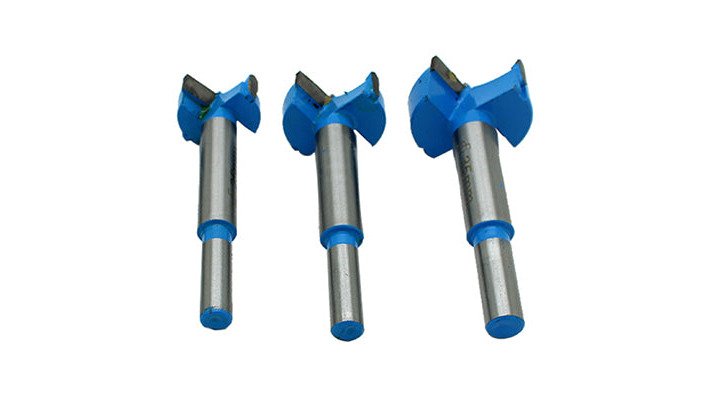
Bore cup holes at low speed and let the cutter do the work. Our cabinet hinge hole cutter is available in 26mm, 35mm and 40mm diameters. For pilot holes, a self-centring bit keeps the point exactly where the hinge plate needs it.

Pair cutters with the right wood drill bits for pilot and carcass work, and keep a dedicated set for cabinet jobs so site grit never dulls them.
Cordless Drill Torque Settings for Cabinet Screws
Cordless drill torque settings for cabinet screws should sit low: start around setting 5 to 8 on an 18V drill and test on an offcut before touching a door. Hinge plate screws into chipboard need just enough torque to seat the head flush. Carcass screws joining two boards can take a little more.
The clutch exists to slip before the screw strips its hole. Set it too high and you will feel the screw spin freely in stripped chipboard, which no amount of tightening fixes.
Setting Clutch and Speed for Hinge Plates and Carcass Screws
Run the drill in low gear for screwdriving and reserve high gear for boring. Drive hinge screws with a Pozi bit that fits the recess fully; a worn bit cams out and chews the screw head.
Blum M31.1000 ECODRILL Hinge Drilling Jig →
Match your fixings to the job: carcass screws for board-to-board joints, and the correct hinge screws for plates. Blum Ø6mm Euro screws suit mounting plates and runners, while 3.9mm x 16mm zinc hinge screws cover standard hinge bodies.
Keep the clutch low and test on an offcut before any door goes near the drill.
| Item | Value | Note |
|---|---|---|
| Starting clutch setting | 5 to 8 on an 18V drill | Test on an offcut first |
| Hinge plate screws into chipboard | Just enough torque to seat head flush | Clutch should slip before the screw strips |
| Carcass screws joining two boards | A little more torque | Board-to-board joints |
| Gear for screwdriving | Low gear | Reserve high gear for boring |
| Blum Euro screws | Ø6mm | Suit mounting plates and runners |
| Zinc hinge screws | 3.9mm x 16mm | Cover standard hinge bodies |
Tools Needed for Kitchen Cabinet Installation Beyond the Drill
Tools needed for kitchen cabinet installation go well beyond the drill: a spirit level, a combi square, a rubber mallet, clamps, a tape measure and a decent drill jig. Levelling is where most amateur fits fail. Cabinets must sit plumb and level before doors go on, or every hinge adjustment fights the carcass.
A hinge drilling jig, such as the Blum ECODRILL, removes guesswork from cup positions across a run of doors.
Specs That Separate a Cabinet Drill from a Site Drill
When comparing drills, compact size, low weight, a fine clutch and smooth low-speed control are worth considering. Maximum torque figures matter far less than control at the bottom end.
Best for: joiners and fitters boring hinge cups and driving short screws all day. Skip if: your work is mostly heavy framing, where a larger high-torque drill earns its place.
Check the chuck runout on any drill before trusting it with a 35mm cutter. Visible wobble means oval holes and hinges that never sit right.
Building Your Cabinet Installation Kit with FixFit
Building a cabinet installation kit is mostly a hardware decision, and it pays to buy the drill around the fittings you actually use. At FixFit, we supply Blum and Hafele hardware for joinery and fit-out work, so the bits, jigs and screws match the hinges and plates going into your cabinets.
Frequently Asked Questions
What type of drill is best for installing cabinets?
A cordless drill driver with a clutch is the workhorse for cabinet installation. Look for 18V power, two speed ranges and a clutch with at least 15 settings so you can drive hinge screws without stripping the chipboard. An impact driver suits long carcass screws and assembly, but its hammering action is too aggressive for hinge plates and adjustable feet, so most fitters run both tools rather than one.
Do you need an impact driver to install kitchen cabinets?
Not strictly, but it speeds up carcass assembly and long screw runs considerably. An impact driver delivers rotational blows that drive screws faster with less wrist strain, which matters when you are fixing dozens of units in a day. Keep it away from hinge mounting plates and delicate fittings, where the impact action can crack the board or overdrive the screw. A cordless drill and impact driver combo for woodworking covers both jobs.
What voltage cordless drill is best for cabinet installation?
18V is the practical standard for trade work. It gives enough torque for carcass screws and hinge plates while staying light enough to hold at shoulder height for long stretches. A 12V drill is fine for light hinge work and flat-pack assembly, but it will labour on thicker boards and long screws. Choose a model with two batteries so one charges while you work.
How much torque do I need for cabinet installation?
Around 30 to 50Nm of maximum torque covers most cabinet work, from 3.9mm hinge screws into 18mm chipboard to mounting plates and drawer runners. What matters more is the clutch range: you want fine low-torque settings so screws seat flush without crushing the board. Use a low clutch setting for hinge plates and a higher one for carcass fixings, and let the drill do the work rather than forcing it.
What drill bits are best for fitting cabinets?
You need a 35mm hinge hole cutter for concealed cup hinges, a 2.7mm or 5mm bit for pilot holes depending on the screw type, and a self-centring bit for mounting plates so holes land exactly where the hinge needs them. A dedicated hinge drilling jig keeps cup depths consistent at 13 to 15mm.
Cabinet installation rewards control over power, and the right hardware makes that control repeatable. FixFit supplies Blum and Hafele fittings, drilling jigs and fixings with dedicated support to help you specify correctly. Get started with FixFit and fit every cabinet right the first time.
