

Soft Close vs Self Close Drawer Slides
Table of Contents
- Soft Close vs Self Close Drawer Slides: Key Differences
- How to Install Soft-Close Drawer Slides
- Full-Extension Drawer Slides and Their Advantages
- How to Adjust Soft-Close Drawer Slides
- Comparison Table: Soft Close, Self Close, and Standard Runners
- Cost and Durability: Which Option Offers Better Value
- Which Type Should You Choose for Your Project
- Frequently Asked Questions
Last Updated: October 13, 2026
Soft Close vs Self Close Drawer Slides: Key Differences
When you're choosing drawer slides for a kitchen renovation, furniture build, or cabinet project, the difference in soft close vs self close might seem small. It's not. These two mechanisms solve different problems, cost differently, and feel completely different when you use them day after day.

Soft close drawer slides use a damping mechanism that slows the drawer as it closes, bringing it gently to a stop regardless of how hard you push. Self close slides (also called push-to-open or push-close) use a spring mechanism that closes the drawer automatically after you've pushed it partially shut. The distinction matters because one prioritises comfort and control; the other prioritises convenience and space-saving design.
At FixFit, we stock both types from trusted manufacturers like GTV and Blum, and we've found that most projects benefit from understanding exactly where each one wins. The choice often comes down to your budget, your cabinet design, and how you want the drawer to feel in daily use.
How to Install Soft-Close Drawer Slides
Installing soft-close drawer slides requires precision but follows a straightforward process. The key is accurate measurement and alignment, because even small errors can prevent the soft close mechanism from functioning properly.
Start by measuring your drawer depth and width. Most soft-close slides come in standard sizes from 250mm to 700mm. Measure from the inside back of the drawer box to the inside front edge where the drawer front will sit. This measurement determines which slide size you need. Next, mark the mounting position on the inside of the drawer sides. Soft-close slides are typically mounted 45mm from the top of the drawer side, though you should verify this against your specific product's instructions.

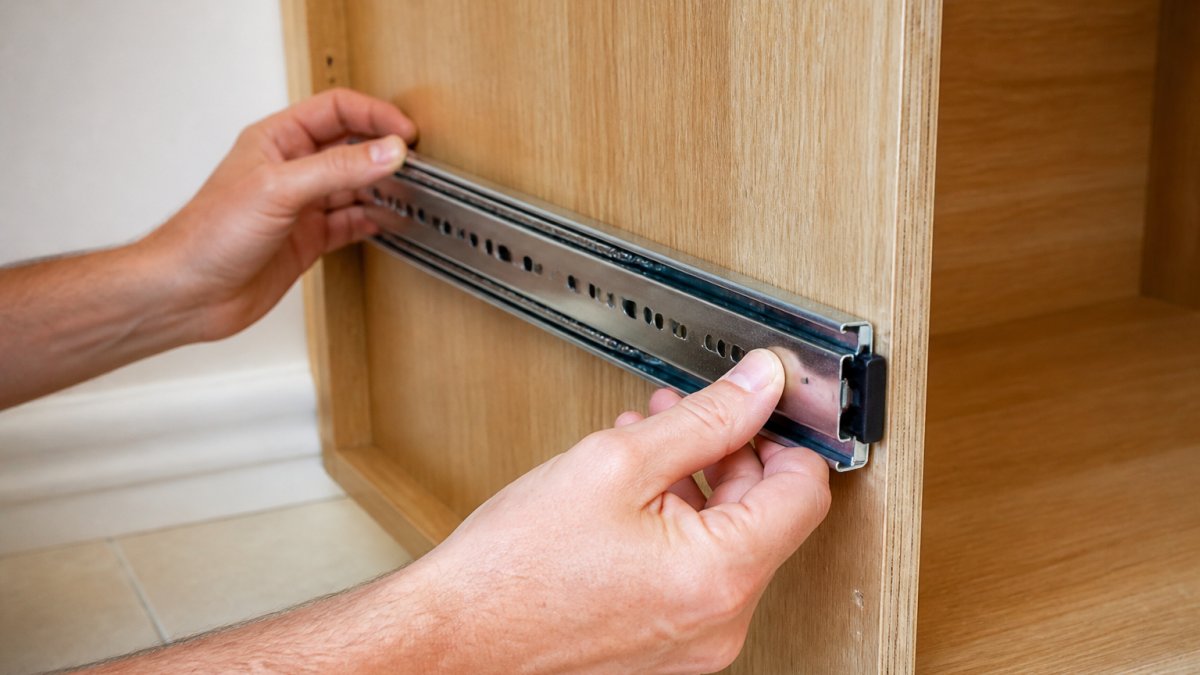
Use a drill to attach the slides to the drawer box using the provided screws. Most soft-close slides use a quick-release system, which makes installation faster and allows adjustment if needed. Mount the corresponding runners to the cabinet frame at the same height as the drawer slides. The runners must be perfectly level and parallel to each other, or the drawer will bind or sit unevenly.
Test the drawer movement before installing the drawer front. Open and close it several times to ensure smooth operation and proper soft-close engagement. If the soft close feels too fast or too slow, most quality slides allow minor adjustment. Once you're satisfied, secure the drawer front and make any final tweaks.
Full-Extension Drawer Slides and Their Advantages
Full-extension slides allow you to pull the drawer all the way out until it stops at the end of the runner, giving you complete access to the entire drawer depth. This is fundamentally different from partial-extension slides, which stop short and leave part of the drawer inaccessible without removing it completely.
For kitchen drawers, this matters more than you might think. A full-extension runner lets you reach items at the very back without having to remove the drawer or reach awkwardly over the front edge. This is particularly valuable in deep kitchen cabinets or under-bench storage where items get lost at the back.
Most soft-close and self-close slides available today offer full extension, though this varies by size. The GTV Soft Closing Ball Bearing runners we stock, for example, provide full extension in sizes from 400mm to 600mm. Full-extension capability typically adds to the cost compared to standard runners, but the usability improvement justifies it for most modern kitchen and bathroom projects.
The trade-off is that full-extension slides require stronger construction to handle the additional use and movement. They're heavier-duty than partial-extension alternatives, which is why they're often specified for high-end cabinetry and commercial applications. If your project involves frequent drawer use or heavy loads, full extension becomes even more valuable.
How to Adjust Soft-Close Drawer Slides
Soft-close drawer slides sometimes need adjustment after installation. The most common issue is that the closing speed feels too fast or too slow, or the drawer doesn't sit flush with the cabinet face.

Most quality soft-close slides include a damping adjustment screw or dial. This controls how quickly the damper engages and slows the drawer. If the drawer slams shut too quickly, locate the adjustment mechanism (usually on the side of the slide) and turn it to increase damping resistance. If the drawer closes too slowly and feels sluggish, reduce the damping force slightly.
For height or alignment issues, check whether your mounting screws are fully tightened. Loose mounting is the most common cause of uneven drawer position. Tighten all screws and retest. If the drawer still sits unevenly, you may need to shim one side slightly using thin spacers under the runner.
If the soft close mechanism doesn't engage at all, verify that the drawer is fully closed and that nothing is obstructing the damper rod. Debris or a bent component can prevent engagement. Clean the mechanism gently and test again.
Drawer Runners Push To Open Soft Close Side Mounted Ball Bearing Slides →
Comparison Table: Soft Close, Self Close, and Standard Runners
| Feature | Soft Close | Self Close | Standard (No Close) |
|---|---|---|---|
| Closing Mechanism | Hydraulic damper | Spring-loaded | Manual only |
| Effort Required | Minimal push | Light push to mid-point | Full push to close |
| Closing Speed | Controlled, slow | Automatic after push | User-controlled |
| Noise Level | Very quiet | Quiet | Can be loud if slammed |
| Installation Complexity | Moderate | Moderate | Simple |
| Cost per Pair | £6.38-£7.80 | £6.62 | £3.10 |
| Durability (Cycles) | 60,000-80,000 | 60,000 | Varies |
| Best For | Comfort, daily use | Space-saving, convenience | Budget projects |
| Load Capacity | 25-30 kg | 25-30 kg | Up to 35 kg |
Cost and Durability: Which Option Offers Better Value
Soft-close drawer slides cost more upfront than standard or self-close alternatives, but the durability and user experience often justify the investment. A pair of soft-close GTV runners costs around £6.38-£7.80, compared to £3.10 for standard runners. That's roughly double the price for a single drawer.
However, durability testing shows that soft-close slides from reputable manufacturers like GTV are certified for 60,000 to 80,000 cycles. A typical kitchen drawer might be opened and closed 3-5 times per day. At that rate, a soft-close slide would last 30-40 years before reaching its rated cycle limit. Standard runners, by contrast, often fail much sooner under heavy use because the constant slamming accelerates wear on the bearings and mounting points.
Self-close slides sit in the middle. They cost slightly more than standard runners but less than soft-close. They're durable enough for most residential applications and offer the convenience of automatic closing without the premium price tag.
For a professional project or high-end residential renovation, soft-close slides represent excellent value when you factor in longevity and the reduced maintenance and repair costs over the drawer's lifetime. For a budget-conscious DIY project or a space that sees light use, standard runners or self-close slides may be sufficient.
Which Type Should You Choose for Your Project
The choice between soft close and self close depends on three factors: your budget, your usage pattern, and the aesthetic you're aiming for.
Choose soft close if you're building or renovating a kitchen or bathroom where drawers will be used multiple times daily. The smooth, controlled closing experience reduces noise, prevents slamming, and feels noticeably more refined. If your client or household values quality and comfort, soft close is the right choice. It's also ideal for homes with children or elderly residents, where safety and ease of use matter.
Choose self close if you want automatic closing without the premium price. Self-close slides work well in spaces where convenience matters but budget is tight. They're also useful in designs where you want to eliminate visible handles and prefer a push-to-open aesthetic. Self-close slides are durable and reliable for residential use, though they don't offer the same level of control as soft close.
Choose standard runners only if cost is your absolute priority or the drawer will see minimal use. Standard slides are perfectly functional and durable, but they lack the refinement of soft-close or the convenience of self-close.
For most professional projects and high-end residential renovations, we recommend soft-close slides. The FixFit range includes the Drawer Runners Push To Open Soft Close Side Mounted Ball Bearing Slides at £7.80 per pair, which combines soft close with push-to-open convenience and full extension access. For projects where self-close functionality suits your design better, the Drawer Runners Push to Open Side Mounted 45mm Ball Bearing at £6.62 offers excellent value without compromising on durability or ease of installation.
The difference between soft close and self close is ultimately about the daily experience. Soft close prioritises comfort and refinement. Self close prioritises convenience and simplicity. Both outperform standard runners in durability and user satisfaction. Your choice should reflect what matters most to your project and your budget.
Frequently Asked Questions
What is the difference between soft-close and self-close drawer slides?
Soft close slides use a hydraulic or pneumatic damping mechanism that slows the drawer as it closes, bringing it to a complete stop without slamming. Self close slides use a spring mechanism that automatically pulls the drawer shut once you push it past a certain point, but they close with more force and speed. Soft close mechanisms provide a quieter, more controlled closure, whilst self close relies on spring tension alone.
Are soft-close drawer slides worth the extra cost?
Soft close slides cost more upfront but offer significant benefits for high-use drawers. They reduce noise, prevent slamming that can damage contents, and extend drawer lifespan by reducing impact stress. For professional kitchens, bathrooms, and bespoke furniture projects, the durability and user experience justify the investment. Standard runners cost from £3.10, whilst soft close options range from £6.38 to £7.80, making them a modest premium for long-term performance.
Can you replace standard drawer slides with soft-close slides?
Yes, you can replace standard runners with soft close slides if the mounting type matches, side mounted to side mounted, undermount to undermount. Measure your existing runner length and load capacity, then select soft close slides in the same size. Most soft close slides from FixFit are SGS certified for 60,000 to 80,000 cycles, making them suitable replacements for worn or outdated runners across kitchens, bedrooms, bathrooms, and office furniture.
Do soft-close drawer slides work with every drawer size?
Soft close slides are available in sizes from 250mm to 700mm, covering most domestic and commercial drawers. However, drawer width cannot exceed the nominal slide length for proper operation. Check your drawer dimensions before ordering. Full extension capability is available in sizes from 400mm to 600mm on most soft close models, whilst smaller sizes have partial extension. Always measure your drawer depth and width to select the correct runner size.
Choosing the right drawer slides affects how your cabinets feel and perform for years to come. Whether you prioritise soft closing comfort or self-closing convenience, FixFit stocks premium runners from trusted brands like GTV and Blum, all certified for durability and backed by dedicated customer support. Get started with FixFit and ensure your project achieves the right product, first time, every time.