

Are heavy-duty concealed hinges worth it?
Last Updated: October 25, 2026
Quick Summary
Heavy-duty concealed hinges are worth it if appearance matters, you need post-installation adjustment capability, or you're undertaking professional joinery work. They cost more upfront than butt hinges but justify the investment through aesthetic quality and labour savings when rework is avoided.
- Concealed hinges cost £31-46 per hinge versus £2-5 for butt hinges, a significant difference across multiple doors.
- They offer three-way adjustment (up/down, left/right, depth) without removing hardware, saving labour on door alignment corrections.
- Installation requires routing or drilling cavities and takes 30-45 minutes per door for professionals, or double that for DIY installers.
- Load capacity ranges from 40 kg to 120 kg depending on model, requiring accurate door weight measurement and hinge count calculation.
- For single DIY projects, butt hinges remain sensible; for professional work or multi-door renovations, concealed hinges align with client expectations.
Table of Contents
- What are heavy-duty concealed hinges and why consider them?
- Concealed hinges vs butt hinges: which delivers better value?
- Understanding concealed hinge load capacity for your doors
- How many hinges for a heavy door: sizing your hardware correctly
- Heavy-duty hinge installation: complexity and cost implications
- Cost-effectiveness: when heavy-duty concealed hinges pay for themselves
- Choosing your heavy-duty concealed hinges with FixFit
- Frequently Asked Questions
What are heavy-duty concealed hinges and why consider them?
Heavy-duty concealed hinges are internal door fittings designed to support doors weighing 40-120 kg whilst remaining completely hidden from view. Unlike traditional butt hinges that sit visibly on the edge of a door frame, concealed hinges sit inside the door and frame, creating a seamless, minimalist aesthetic. They're engineered with 3D adjustment capabilities, allowing you to fine-tune door alignment after installation without removing the hinge.
The appeal is straightforward: you get professional-grade hardware without the visual clutter. For joiners and cabinet makers, this matters because clients increasingly expect bespoke finishes. For DIY enthusiasts tackling a kitchen renovation, concealed hinges deliver that high-end look without the premium price tag of full bespoke cabinetry.
But here's where the decision gets interesting. Heavy-duty concealed hinges cost more upfront than standard butt hinges. If you're exploring other heavy-duty options, you might also consider soft close hinges for heavy doors to compare solutions. They're also more complex to install, requiring precise measurements and careful positioning. The question isn't whether they're good, it's whether the benefits justify the extra expense and effort for your specific project.
At FixFit, we supply professional-grade concealed hinges from trusted brands like CEAM and Sugatsune. Understanding these factors helps you decide whether heavy-duty concealed hinges are worth the investment.
Concealed hinges vs butt hinges: which delivers better value?
Butt hinges are the traditional choice: two rectangular plates, one mounted to the door, one to the frame, connected by a pin. They're visible, affordable, and they work. Concealed hinges hide inside the door structure, requiring routing or drilling into the door and frame to accommodate them. The trade-off is cost versus aesthetics.
Butt hinges start around £2-5 per pair. Concealed hinges typically range from £31-46 per hinge depending on load capacity. For a standard three-hinge door setup, you're looking at roughly £93-138 for concealed versus £6-15 for butt hinges. That's a significant difference if you're fitting multiple cabinets.
Where concealed hinges earn their cost is in two specific scenarios. First, when appearance matters to your client or your own standards. A flush-faced cabinet door with concealed hinges looks intentional and refined. Second, when you need post-installation adjustment. Concealed hinges offer three-way adjustment: up/down, left/right, and depth. Butt hinges don't.
The durability argument is often overstated. Modern butt hinges from reputable manufacturers perform reliably for decades. Concealed hinges do the same. The real difference isn't lifespan, it's flexibility and finish. If your project demands a specific aesthetic or you're uncertain about door alignment, concealed hinges pay for themselves in saved labour and rework.
For budget-conscious DIY projects where appearance is secondary, butt hinges remain the sensible choice. For professional joinery work or high-end renovations, the investment in concealed hinges typically aligns with client expectations.
Understanding concealed hinge load capacity for your doors
Load capacity is where the engineering matters. Heavy-duty concealed hinges aren't one-size-fits-all. They're graded by the weight they can safely support, and matching the right grade to your door is essential.
A single concealed hinge rated for 40 kg can support that weight alone, but most installations use two or three hinges distributed across the door height. The CEAM 3D Door Concealed Adjustable Hinges 1230, for example, supports 50 kg with two hinges and 80 kg with four hinges.
Here's the practical calculation: weigh your door, then add roughly 10-15% for seasonal wood movement and wear. If your door weighs 60 kg, you need hinges rated for at least 70 kg total capacity. Using underrated hinges leads to sagging doors and accelerated wear. Overrating is fine, it's a safety margin.
The Concealed Adjustable Invisible Door Hinge 80kg from FixFit's range handles standard to heavy residential doors. The lighter Concealed Adjustable Invisible Door Hinge 40kg suits internal cabinet doors and lighter applications. For heavier timber or solid-core doors, the CEAM 3D 1131 at 120 kg capacity provides the headroom you need without risk.
Load capacity also affects installation complexity. Heavier hinges require more precise routing and positioning because they're supporting greater force. The margin for error shrinks. This is why professional installers often recommend slightly over-specifying capacity, it builds in tolerance for imperfect installation and gives the hardware room to perform well over years of use.
How many hinges for a heavy door: sizing your hardware correctly
The number of hinges you need depends on door height, weight, and material. A standard rule is one hinge per 60-75 cm of door height, with a minimum of two and a maximum of four for residential doors.
For a 200 cm tall door weighing 80 kg, you'd typically use three hinges: one 20 cm from the top, one 20 cm from the bottom, and one in the middle. This distributes load evenly and prevents the door from sagging at the centre. Heavier doors or those made from solid timber benefit from four hinges, particularly if the door is over 2 metres tall.
A common mistake is assuming more hinges always equals better performance. Beyond four hinges on a residential door, you're adding cost and complexity without meaningful benefit. The hinges are already over-engineered for the load. Three hinges handle most residential scenarios up to 120 kg. Four hinges are the practical maximum for standard installations.
When specifying hinges, always check the manufacturer's load rating for your specific configuration. FixFit's product listings include maximum door weights for two, three, and four hinge setups, so you can match your door precisely to the right hardware.
Heavy-duty hinge installation: complexity and cost implications
Installation difficulty is where many DIY projects stall. Concealed hinges require routing or drilling cavities into both the door and frame to accommodate the hinge body. This isn't a simple task with a basic drill.
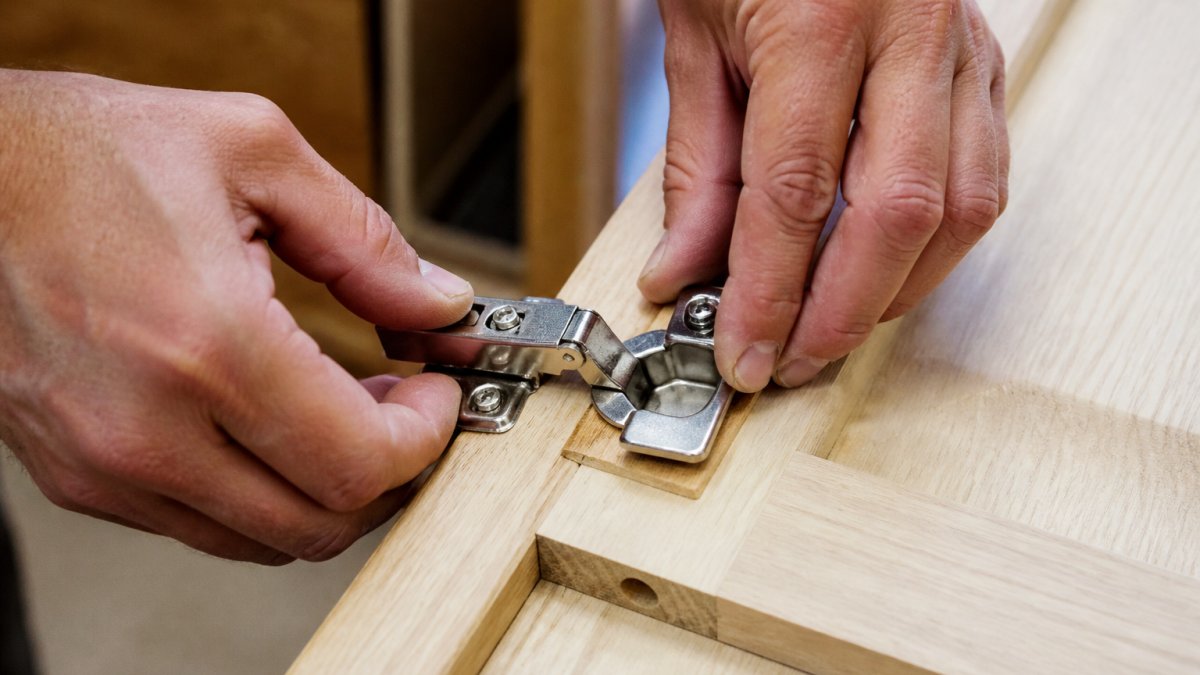
You need a router with a template or a drill press for accuracy. The hinge cavity must be precisely sized, too loose and the hinge moves; too tight and you can't fit it.
Ceam 3D Door Concealed Adjustable Hinges 1131 →
For professionals, installation adds 30-45 minutes per door beyond standard carpentry. For DIY installers, expect double that if you're learning as you go.
This is where the cost-benefit analysis shifts. If you're fitting a single cabinet door, paying a professional might exceed the savings from choosing concealed hinges over butt hinges. If you're fitting ten doors across a kitchen renovation, the per-door cost drops and the investment becomes worthwhile.
The labour cost also depends on door construction. Pre-drilled or pre-routed doors (available from some suppliers) cut installation time dramatically. If you're specifying new doors alongside hinges, asking your supplier about pre-routed options can save significant installation cost.
| Scenario | Installation Method | Estimated Time | Best Choice |
|---|---|---|---|
| Single cabinet door, DIY | Route cavity yourself | 60-90 minutes | Butt hinges (simpler) |
| Single cabinet door, professional install | Routed by joiner | 45 minutes labour | Concealed hinges (aesthetic value) |
| Kitchen renovation, 10+ doors | Pre-routed doors supplied | 20-30 minutes per door | Heavy-duty concealed hinges |
| High-end bespoke project | Professional installation with adjustment | 45-60 minutes per door | Heavy-duty concealed hinges (required) |
Cost-effectiveness: when heavy-duty concealed hinges pay for themselves
The financial case for heavy-duty concealed hinges depends on your project type and client expectations.
For a professional joinery workshop, concealed hinges are cost-effective immediately. They're part of your service offering. Clients expect them on bespoke cabinetry. You price the labour and materials accordingly, and the hinges become a standard line item.
For a DIY kitchen renovation on a budget, the calculation is tighter. You're comparing the material cost of concealed hinges against butt hinges, plus the labour cost of installation. If you're doing the installation yourself and have routing equipment, concealed hinges add perhaps £100-150 to a full kitchen refit.
Where concealed hinges often justify their expense is in avoiding rework. A door hung with butt hinges that sags after three months requires either living with it or paying labour to remove hinges, re-drill holes, and reinstall. Concealed hinges let you adjust the door without removing hardware.
For interior designers and architects specifying bespoke projects, concealed hinges are non-negotiable. Your client is paying for a finished product that looks and functions flawlessly. The hinge cost is negligible compared to the overall project budget, and the aesthetic impact is significant.
For construction contractors fitting multiple residential units, concealed hinges might not be cost-effective unless the specification explicitly requires them. Standard butt hinges meet building standards and reduce material costs per unit. Only specify concealed hinges if the design brief calls for it.
Choosing your heavy-duty concealed hinges with FixFit
The right hinge for your project depends on three variables: door weight, installation complexity, and aesthetic requirements.
For lightweight internal cabinet doors under 40 kg, the Concealed Adjustable Invisible Door Hinge 40kg at £31 offers solid value. It handles standard kitchen and bathroom cabinetry, includes 3D adjustment, and comes with all fixings.
For doors in the 40-80 kg range, the Concealed Adjustable Invisible Door Hinge 80kg at £34 provides headroom and flexibility. Most residential kitchen and bathroom doors fall into this range.
For heavier timber doors or applications requiring maximum load capacity, the CEAM 3D Door Concealed Adjustable Hinges 1131 at £46.50 delivers up to 120 kg across three hinges. Fire-resistant (60 minutes) and available in eight finishes, it's built for high-end joinery work where durability and aesthetics both matter.
The Concealed Adjustable Medium Sugatsune HES3D-120 Door Hinge at £34.78 suits high-end furniture and architectural projects. This award-winning hinge offers 3-way adjustment and exceptional durability, having passed a 50,000 open/close cycle test.
The CEAM 3D Door Concealed Adjustable Hinges 1230 at £36.50 bridges the gap: 50-80 kg capacity, compact profile, and professional-grade adjustment. It's ideal for standard residential work where you need reliability without premium pricing.
What makes the difference isn't just the hinge itself, it's having the right one for your specific door. Measure your door weight accurately. Check the load rating for your planned hinge count. Confirm your door thickness matches the hinge specification.
Concealed hinges aren't a universal upgrade. FixFit stocks heavy-duty concealed hinges from CEAM and Sugatsune, with load capacities from 40 kg to 120 kg, so you can find the right hinge for your specific door and get the installation right first time.
Frequently Asked Questions
How much weight can heavy-duty concealed hinges support?
Load capacity depends on the hinge model and number used. The Ceam 3D Door Concealed Adjustable Hinges 1131 supports up to 80 kg with two hinges or 120 kg with three hinges. Lighter-duty options like the 40 kg Concealed Adjustable Invisible Door Hinge support 40 kg with two hinges or 50 kg with three. Always match hinge capacity to your door weight and check manufacturer specifications before installation.
Are concealed hinges stronger than butt hinges?
Heavy-duty concealed hinges and butt hinges serve different purposes. Concealed hinges distribute load across a larger surface area and offer superior adjustability, making them ideal for precision cabinetry and flush-faced doors. Butt hinges are simpler and adequate for lighter applications. For demanding professional projects, heavy-duty concealed hinges provide a refined finish and adjustability when properly sized.
Can concealed hinges be adjusted after installation?
Yes. Most heavy-duty concealed hinges feature 3D adjustment capabilities with removable cover plates that conceal the adjustment screws. This allows you to fine-tune door alignment vertically, horizontally, and in depth after fitting. The Ceam and Sugatsune models both offer this flexibility, making them forgiving for installation tolerances and future maintenance.
Do I need special frame preparation for heavy-duty concealed hinges?
Heavy-duty concealed hinges require precise frame preparation, including appropriate depth (typically 21-22 mm minimum) and accurate hinge cup positioning. Door thickness must match hinge specifications (usually 29-45 mm). Professional installation or careful measurement is essential to avoid costly errors. This preparation is more demanding than standard butt hinge fitting but delivers a superior, seamless finish.
